

Every skier and snowboarder who lands in Tokyo hears about the same two Yuzawa names: Gala, because it’s literally inside a Shinkansen station, and Naeba, because of its size. But locals quietly head to the next valley over. Maiko is 90 minutes from Tokyo by bullet train plus a free 20-minute shuttle — and on the right day, you’ll wonder where everybody went. I rode it this March; here’s the honest guide.
Part 1 — The mountain
Three mountains stitched together (plan your day)

On the trail map Maiko looks like one resort. On snow, it’s really three ski areas stitched together — Maiko (lower), Nagamine (middle) and Okusoeji (top) — spread across 26 courses and about 196 hectares. Here’s what no guide tells you: moving between the three zones is slow. Cross over at the wrong time and you’ll burn 30–60 minutes of your day just repositioning. My rule: pick your zone for the morning, cross once around lunch, and never zigzag. It’s the single biggest difference between a great day and a frustrating one here.
The 6 km top-to-bottom run

From the top of the gondola you can link one continuous run of roughly 6,000 meters back to the base — gentle enough (average 6°) that even beginners can ride top-to-bottom. For intermediates it’s pure cruising joy; for families it’s the reason to come.
Okusoeji — where the good snow lives (honest version)

I was there on March 6th, a warm spring Friday. Lower down, the snow was thinning; up in Okusoeji, the highest zone, the snow was still deep and in good shape. That’s the pattern here: altitude saves the day in spring. One honest warning — Okusoeji is mostly steep, advanced terrain. Families and cautious intermediates will be happier in the lower two zones. (For context: 2025–26 was a lean snow year for the whole Yuzawa area, and from March the warmth arrived fast. If you’re chasing powder, aim for January–February.)
The weekday move (this is the whole trick)

Weekends at Maiko get genuinely crowded — I’d been watching recent posts on X before my trip and the Saturday reports were grim. So I took a Friday off. Result: almost zero lift lines, and I rode the gondola completely alone. No shared cabins, no queue. If you can shift your ski or snowboard day even one day off the weekend, Maiko pays you back double.
Lift tickets & value
Walk-up day tickets are ¥7,000. But Japan’s ticket site Asoview sells an early-bird Maiko day ticket for around ¥4,500 — roughly 35% off. Last season they were on sale from August until December 19, so lock yours in before you fly. Heads-up: Asoview is a Japanese-only site (no English interface) — the checkout is manageable with your browser’s translate function, and the discount is worth the five minutes. (That’s an affiliate link — it helps keep these guides free, at no extra cost to you.)
My honest take
Maiko won’t out-steep Arai or out-powder Hokkaido. What it does better than almost anywhere: the effort-to-fun ratio from Tokyo. Bullet train, free shuttle, empty weekday gondola, a 6 km cruiser, and a ¥4,500 ticket. For a first Japan ski & snowboarding day, a jet-lag shakeout day, or a no-fuss weekday escape, it’s hard to beat — for skiers and snowboarders alike.
Part 2 — How to actually do this trip
Getting there (yes, car-free)

Tokyo Station → Echigo-Yuzawa is 75–90 minutes on the Joetsu Shinkansen. From the station’s East Exit (about 80 m to the right), free shuttle buses run daily — about 20 minutes to the Maiko Kogen Hotel side, about 30 minutes to the day-trip ski center. Mind the last buses back: 15:30 from the day center (15:45 weekends), 18:45 from the hotel. I drove in myself this time, but the shuttle is what makes Maiko one of the easiest fully car-free ski & snowboarding days in Japan. Buy the Shinkansen ticket directly — no rail pass pays off for this round trip.
Day trip or weekend?
Day trip: first Shinkansen out (~7am), riding by 9:30, last shuttle back and home for dinner. Doable and popular. Better: one night. Stay slopeside at the Maiko Kogen Hotel (onsen in-house) or down in Echigo-Yuzawa’s onsen town, and you get first gondola — which, on a weekday, means a private mountain.
Off the snow: Echigo-Yuzawa station is an attraction
Build in 90 minutes before your train home for Ponshukan, the sake hall inside the station’s CoCoLo complex: coin-operated tasting machines pour dozens of local Niigata sakes (5 tasting coins for ¥1,000 — the price went up from ¥500 in July 2026), and there’s even a sake bath (¥950) in the same complex. Reviewers consistently rate it the best après-ski & snowboarding hour in the valley, and it’s hard to argue with sake-by-vending-machine.
Where to stay
- Slopeside — Maiko Kogen Hotel. Ski & snowboarding-in access, onsen, family-friendly.
- Onsen town — Echigo-Yuzawa. Ryokan and public baths a shuttle ride away; pairs the ski &snowboarding day with a proper onsen-town evening.
- Tokyo bookends — book your flight + first Tokyo hotel as a package (Expedia Australia for Sydney departures).
Book the essentials (and what to just buy direct)
Same deal as all my guides: some are affiliate links — they keep these guides free, at no extra cost to you. Where buying direct is better, I say so.


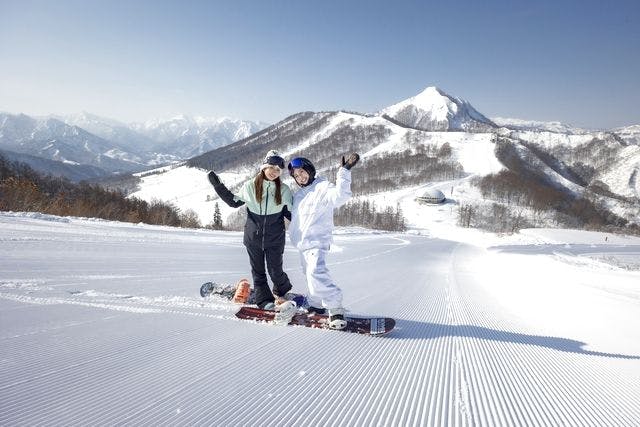
- Flights + first Tokyo hotel (as a package) — best value in from the US or Australia.
- Japan eSIM — connected on landing.
- Airport transfer & Welcome Suica — smooth arrival day in Tokyo.
- Maiko early-bird lift ticket (Asoview, ~¥4,500) — Japanese-only site, worth the five minutes.
- Buy direct: the Tokyo–Echigo-Yuzawa Shinkansen ticket.
- Gear — skis/boards, outerwear and goggles can be rented at the resort, but on busy days popular sizes and boards do sell out — book ahead or arrive early.
FAQ
Is Maiko good for beginners and families? Yes — the lower two zones and the 6 km gentle run are ideal. Just treat Okusoeji (the top zone) as advanced terrain.
Maiko vs Gala? Gala wins on novelty (ski-in Shinkansen station); Maiko wins on space, course variety and crowds — especially on weekdays.
Is English spoken? Expect less English than Niseko-level resorts. Signage covers the basics, and recent visitor reviews say rental and ticket counters manage fine with simple English and translation apps.
When should I go? January–February for the best snow. Spring riding works — stay high in Okusoeji — but by then it’s a groomer trip, not a powder trip.
Is there night skiing & snowboarding? On peak-period evenings, select lower and mid-mountain runs stay open into the evening — check the official calendar for dates.
Planning a Japan ski & snowboard trip beyond the crowds? See all the hidden-resort guides → and check the Nekoma guide for a powder weekend two hours north of Tokyo — and follow the shorts on YouTube — @SecretSnowJapan.